
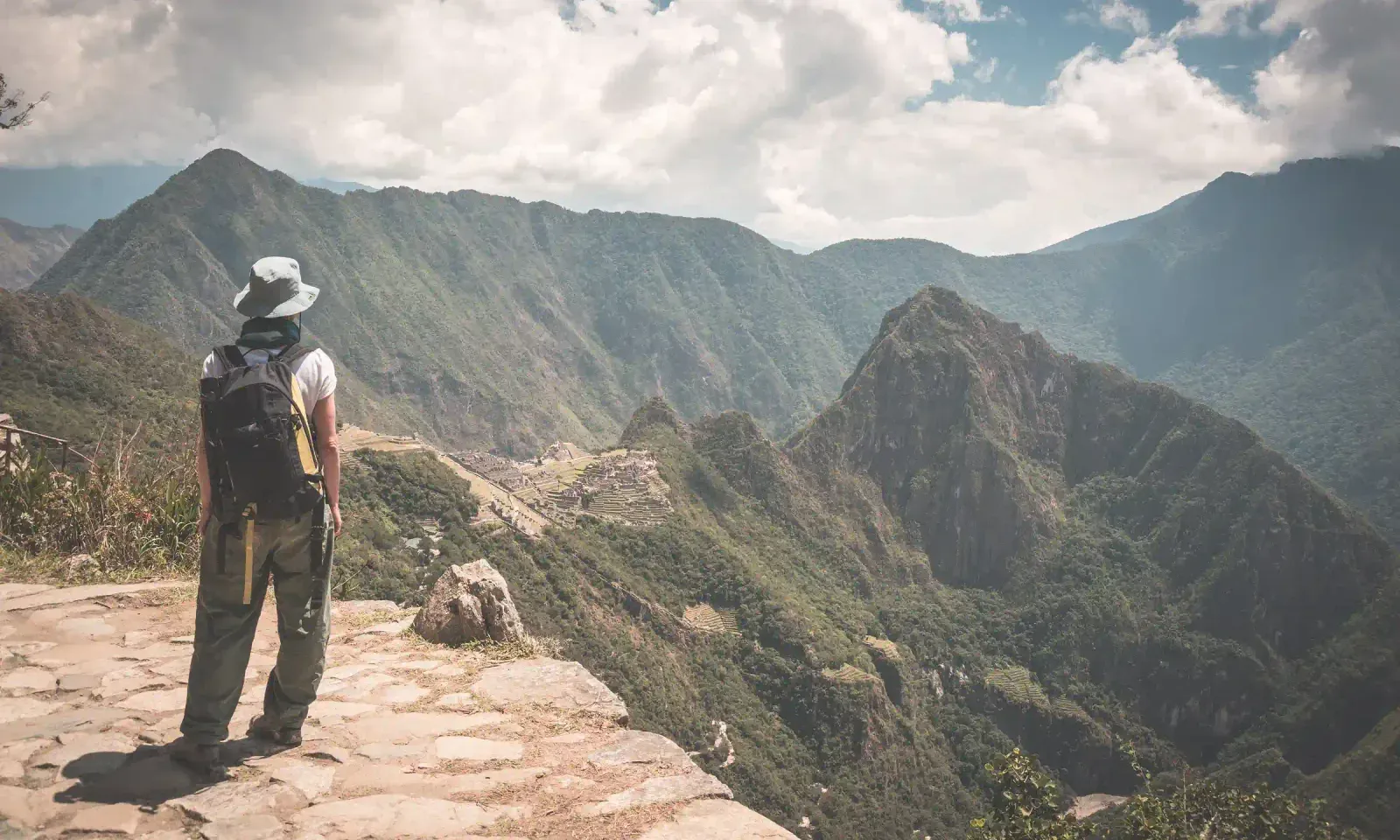
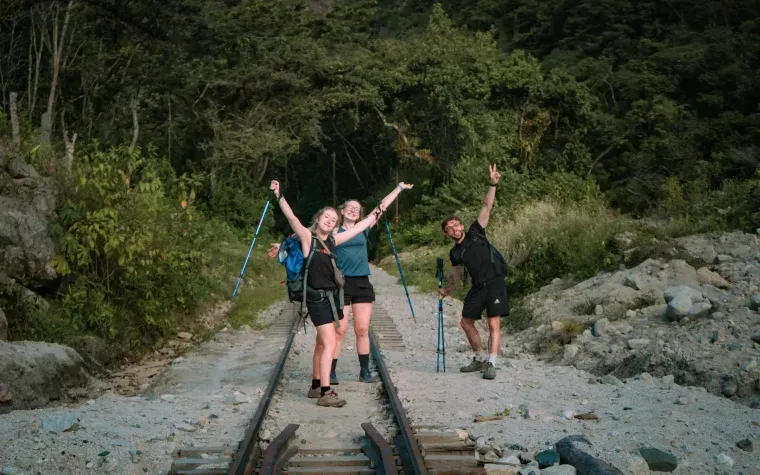
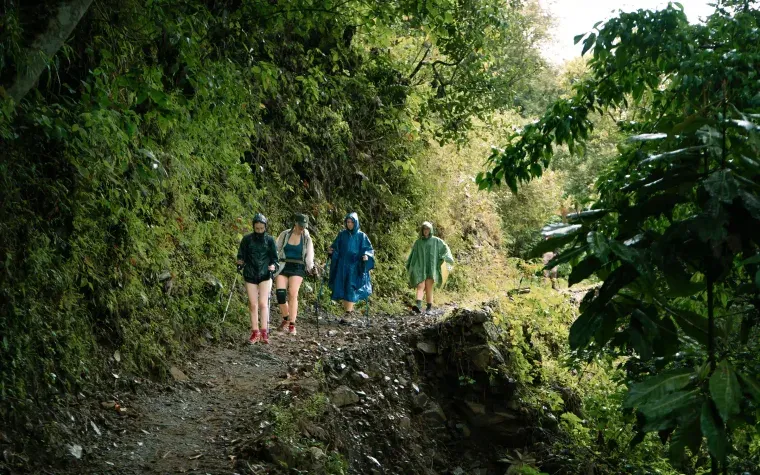
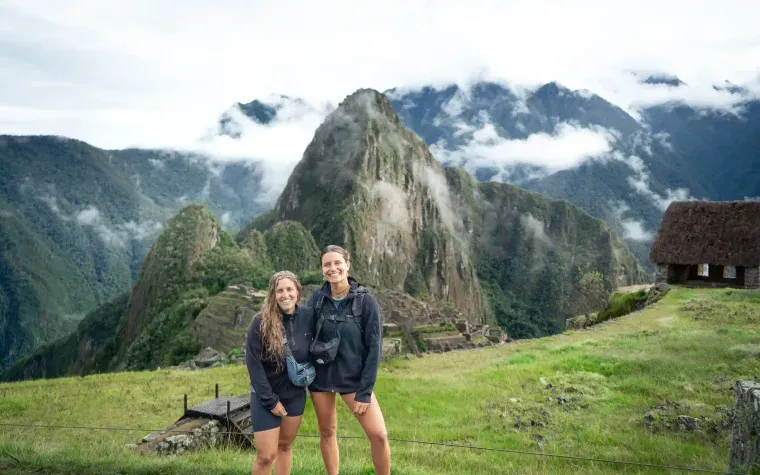
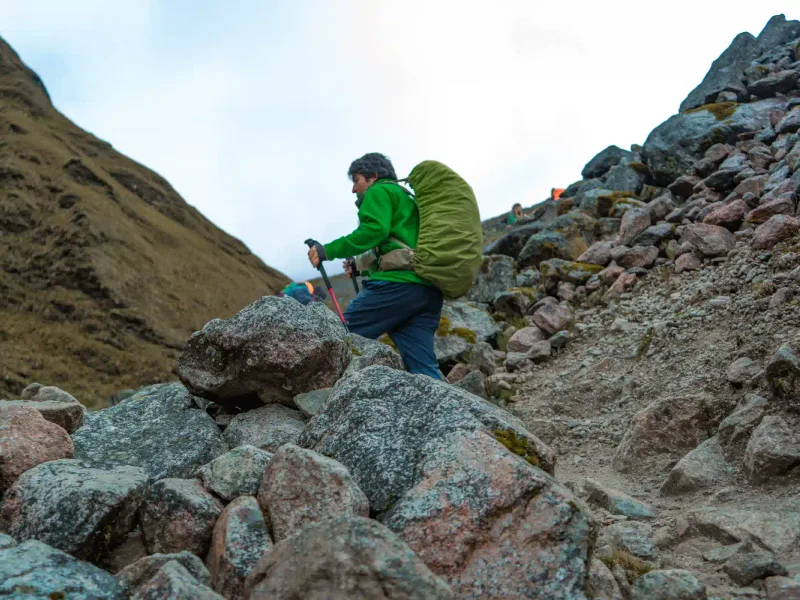
The Inca Trail is the most famous trek in South America and the only one that walks original Inca pathways all the way to Machu Picchu. Over four days it climbs to the 4,215 m Dead Woman's Pass, passes cloud-forest ruins such as Wiñay Wayna, and enters the citadel on foot through Inti Punku, the Sun Gate, at sunrise.
Because it is a protected route, the Inca Trail requires a government permit and a licensed guide, and permits sell out months in advance. This guide covers the route, the permits, difficulty, best season, and how the Inca Trail compares to the Salkantay Trek.
Inca Trail: Key Facts
| Fact | Detail |
|---|---|
| Duration | 4 days / 3 nights (classic) · 2 days or 1 day (short) |
| Highest point | Dead Woman's Pass — 4,215 m / 13,829 ft |
| Total distance | ~42 km / 26 mi (classic 4-day) |
| Difficulty | Challenging — good fitness needed |
| Permit | Required — 500/day, sells out months ahead |
| Best season | May to September (closed every February) |
| Finish | Machu Picchu via Inti Punku (Sun Gate) |
Inca Trail vs Salkantay Trek
Both treks end at Machu Picchu, but they are very different. The Inca Trail walks original Inca stone paths and enters through the Sun Gate, but needs a permit that sells out months ahead. The Salkantay is higher and wilder, needs no permit, and can be booked at short notice.
| Inca Trail | Salkantay Trek | |
|---|---|---|
| Duration | 4 days | 5 days |
| Highest pass | 4,215 m | 4,650 m |
| Permit / quota | Required — sells out months ahead | None needed |
| Scenery | Inca ruins along the trail | Glaciers + cloud forest |
| Enters Machu Picchu via | Sun Gate (Inti Punku) | Bus from Aguas Calientes |
Inca Trail Permits & Best Time
The Inca Trail is capped at 500 permits per day (including guides and porters), so spaces sell out 4–6 months in advance, especially from May to September. Permits are nominative — issued to your name and passport — and cannot be transferred. The trail closes every February for maintenance. The dry season (May–September) has the clearest skies; April and October are quieter shoulder months.
Difficulty & What to Bring
The classic Inca Trail is challenging: the hardest day climbs to the 4,215 m pass, with steep stone staircases and daily distances of 10–16 km. 2–3 days acclimatising in Cusco beforehand is essential. Pack layers for cold nights and strong sun, broken-in hiking boots, rain gear, a head-torch, sunscreen and a refillable water bottle. Porters carry the group gear; a personal porter for your kit is an optional add-on.
Inca Trail FAQ
The dry season from May to September offers the best weather, with clearer skies and less rain, though it is also the busiest period. The trail closes every February for maintenance.
It is considered challenging due to high altitude (up to 4,215 m), steep climbs and long daily distances, requiring good fitness and proper acclimatisation in Cusco beforehand.
Yes. Permits are mandatory and limited to 500 people per day (including guides and porters). They sell out months in advance, especially for the peak season, so early booking is essential.
The most popular route is the 4-day / 3-night trek, starting from Km 82 and arriving at Machu Picchu on the morning of the fourth day. Shorter 2-day and 1-day options start from Km 104.
No, it is not allowed. All trekkers must be accompanied by a licensed guide, and porters and cooks are part of every organised tour.