
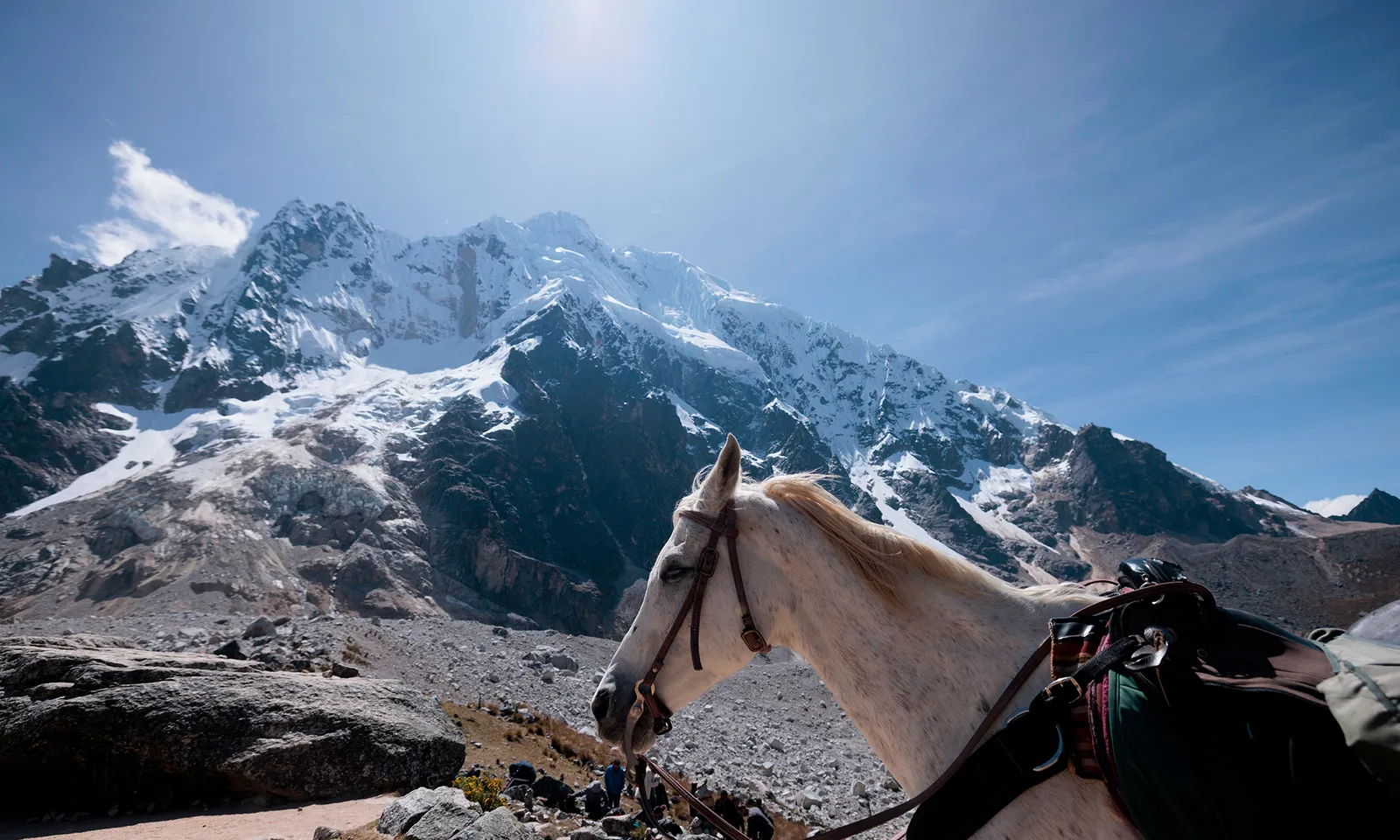
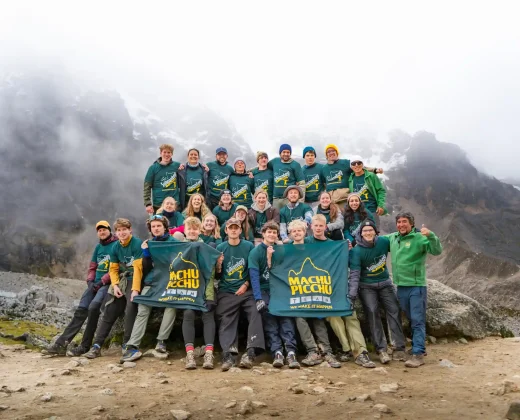
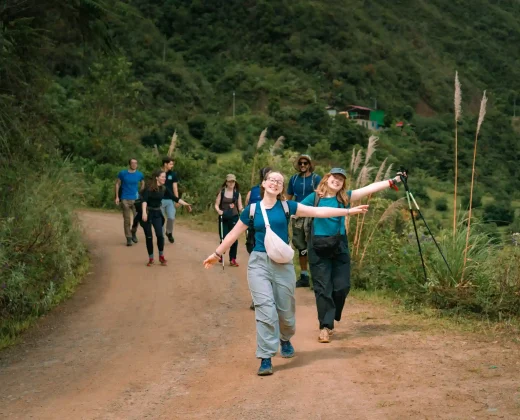
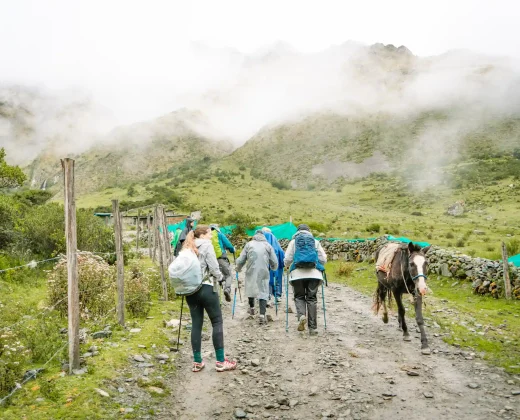
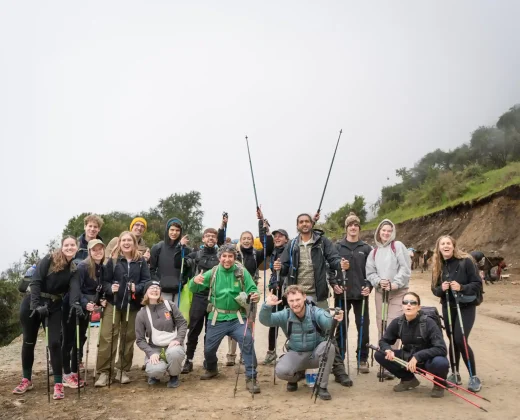
The Salkantay Trek is the most popular alternative to the classic Inca Trail and one of the world's great high-mountain walks. Over five days it crosses the 4,650 m Salkantay Pass beneath the glaciers of Nevado Salkantay (6,271 m), descends into cloud forest, and finishes at Machu Picchu — all with no permit required and no annual quota.
This guide covers the route, altitude, difficulty, best season, and how the Salkantay compares to the Inca Trail, so you can decide if it is the right trek for you.
Salkantay Trek: Key Facts
| Fact | Detail |
|---|---|
| Duration | 5 days / 4 nights |
| Highest point | Salkantay Pass — 4,650 m / 15,255 ft |
| Total distance | ~74 km / 46 mi |
| Difficulty | Challenging — good fitness needed |
| Permit | Not required (unlike the Inca Trail) |
| Best season | May to September (dry season) |
| Finish | Machu Picchu via Aguas Calientes |
Salkantay Trek vs Inca Trail
Both treks end at Machu Picchu, but they are very different experiences. The Salkantay is higher, wilder and needs no permit; the Inca Trail is shorter, walks original Inca pathways, and enters Machu Picchu through the Sun Gate.
| Salkantay Trek | Inca Trail | |
|---|---|---|
| Duration | 5 days | 4 days |
| Highest pass | 4,650 m | 4,215 m |
| Permit / quota | None needed | Required — sells out months ahead |
| Scenery | Glaciers + cloud forest | Inca ruins along the trail |
| Enters Machu Picchu via | Bus from Aguas Calientes | Sun Gate (Inti Punku) |
Best Time to Hike the Salkantay
May to September is the dry season and the best time to trek: clear skies, firm trails and the best mountain views. The shoulder months of April and October are quieter with occasional showers. December to March is the rainy season — trails are muddy and views often clouded; many operators pause the route in February.
Difficulty & What to Bring
The Salkantay is a challenging trek. The hardest day climbs to the 4,650 m pass, so 2–3 days acclimatising in Cusco beforehand is essential. You should be comfortable walking 6–9 hours on consecutive days. Pack layers for sub-zero nights and strong sun, broken-in hiking boots, rain gear, a warm sleeping bag, sunscreen, and a refillable water bottle.
Salkantay Trek FAQ
No. Unlike the Inca Trail, the Salkantay route has no government permit or daily quota, so it can be booked at short notice and year-round (weather permitting).
It is rated challenging. The main difficulty is altitude at the 4,650 m pass rather than technical terrain. With proper acclimatisation in Cusco and reasonable fitness, most healthy hikers complete it.
The Salkantay Pass (Abra Salkantay) sits at 4,650 m / 15,255 ft — the highest point of the trek, reached on the second day below the glaciers of Nevado Salkantay.
The dry season from May to September offers the clearest skies and best trail conditions. The rainy season (December–March) brings mud and clouds, and February is best avoided.
Yes. The classic 5-day Salkantay finishes with a guided tour of Machu Picchu on the final day, reached from Aguas Calientes by bus.